
The Shoulder That Changed Mike Mentzer’s Career
Mike Mentzer’s competitive rise is usually told as a story of philosophy, intensity, and mass—a brilliant mind colliding with a judging system that, in the end, favored something else. What is far less discussed is whether Mentzer’s destiny on the Olympia stage may have been shaped years earlier by a single physical interruption that never fully healed—an interruption that becomes clearer when viewed alongside the visual evidence in the video above.
In the fall of 1971, at just nineteen years old, Mentzer suffered a serious right-shoulder injury while training at an Air Force base gym in Washington, D.C. The injury was severe enough to force him out of training for nearly eight months, effectively removing him from meaningful competition during a critical developmental window. As shown through early and later comparisons in the video above, these were the years when many elite physiques lock in structural symmetry that is difficult to fully recover later.
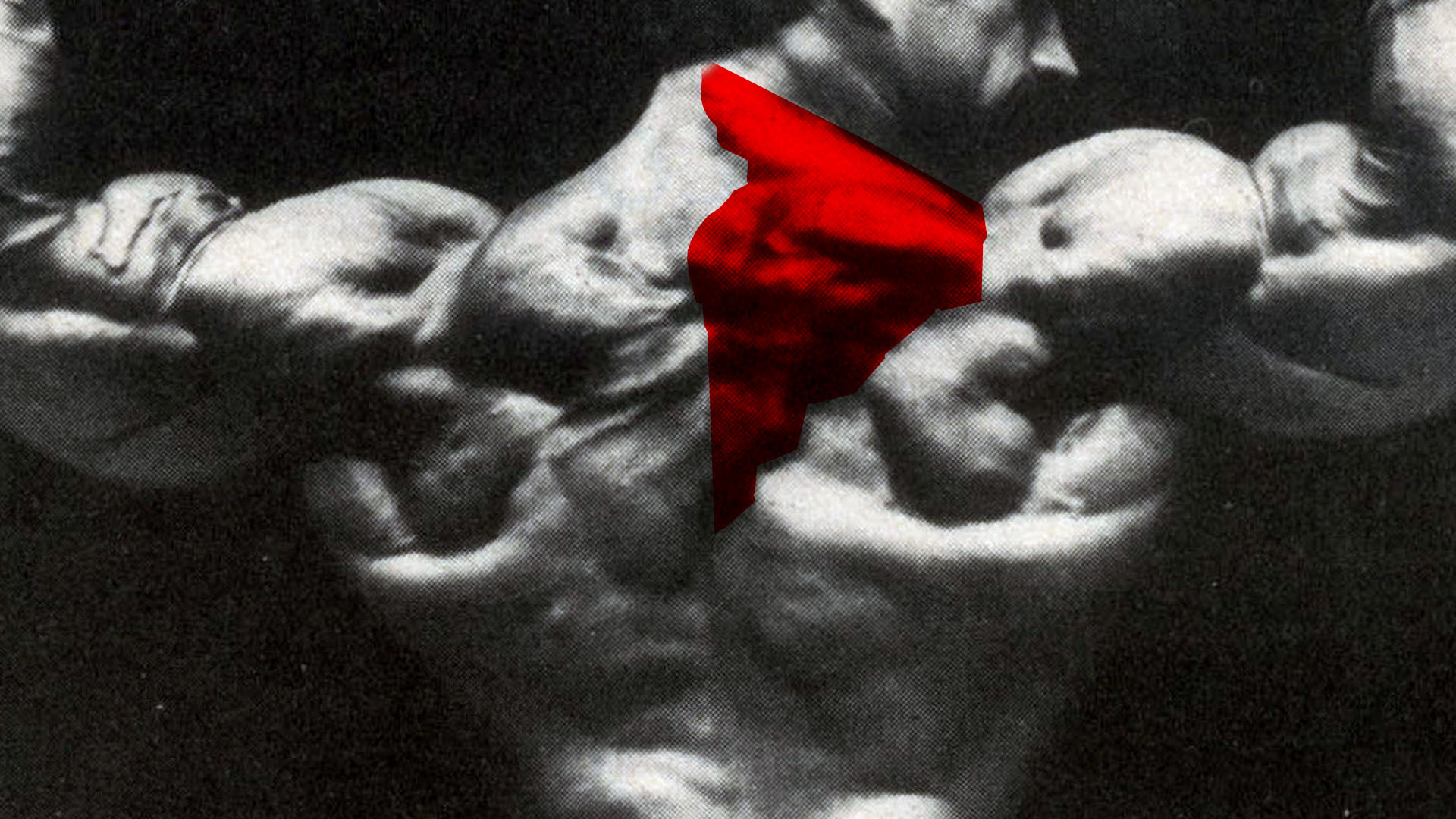
What followed in the late 1970s is familiar to longtime bodybuilding readers: repeated commentary that Mentzer needed more refinement in his back, followed by praise when he appeared to have addressed it in time for his dramatic 1979 Olympia appearance. But a closer look—one that becomes unavoidable after seeing the images presented in the video above—reveals something more specific and more intriguing: a persistent asymmetry in Mentzer’s right upper back, most notably the trapezius.
This is where the story becomes more complex than simple mass versus aesthetics, and where still photographs alone give way to a clearer understanding once the sequence and context shown in the video above are considered.
The “shoulder,” as lifters casually describe it, usually refers to the deltoid. Anatomically, however, the shoulder complex blends into the upper trapezius, a muscle essential to posture, balance, and the visual flow of the back. The video above pauses on these anatomical landmarks to illustrate how even small deviations in this region can alter how a physique reads from the rear.
Whether Mentzer’s early injury directly caused the trapezial irregularity is impossible to prove decades later. But the asymmetry itself is plainly visible—and once it has been clearly highlighted in the video above, difficult to dismiss as coincidence. Even subtle imbalances in the upper back can disrupt the harmony judges are trained to detect at the highest level.
This context casts the 1979 Mr. Olympia in a different light. The contest is often simplified as Frank Zane’s ectomorphic refinement defeating Mentzer’s mesomorphic mass, as though body type alone decided the outcome. But bodybuilding judging is far more exacting than that narrative suggests, a point reinforced by the pose-by-pose breakdown presented in the video above.
The back is not a single bodypart; it is a layered system of muscles whose impact depends on proportion, continuity, and visual symmetry. Zane’s back, while less massive, displayed a seamless uniformity—no visible distractions, no structural interruptions—something that becomes especially apparent when viewed alongside Mentzer in comparative motion, as shown in the video above.
Mentzer, by contrast, brought unprecedented density and intensity, but with a subtle irregularity that broke the illusion of perfect balance. In a sport where judges are trained to see everything, such details matter—and the video above makes clear just how narrow the margin was.
If bodybuilding were judged purely on genetic power, Mentzer would have been untouchable. But Olympia titles are won not by potential, but by coherence. The 1979 decision, viewed through this anatomical lens, looks less like a philosophical rejection of mass and more like a clinical preference for symmetry—an argument that only fully resolves once the visual evidence in the video above is taken into account.

Yeah Mentzer’s Heavy Duty training system was and is very effective to this day, particularly in helping to avoid the human tendency to overtrain !
Never noticed that injury in the trap area, I did like his training philosophy brief but intense.